

What was decided
On 6 November 2026 the European Commission announced that EU Member States had approved a permanent safety limit for cereulide in infant formula, follow-on formula and certain foods for special medical purposes intended for infants. The criterion is being added to the EU rules on microbiological criteria for foodstuffs (Regulation (EC) No 2073/2005) and will enter into force 20 days after its publication in the Official Journal of the European Union. Until then, the final text and figures should be read from the official publication.
What cereulide is
Cereulide is a toxin produced by some strains of the bacterium Bacillus cereus. Unlike the bacterium itself, the toxin is heat-stable: once formed in an ingredient, it is not destroyed by later heat treatment or by preparing the bottle with hot water. It can cause vomiting within hours, and infants are especially vulnerable.
In its rapid assessment of early 2026, EFSA set an acute reference dose of 0.014 µg per kg of body weight. From it, the Commission derived interim action thresholds of 0.43 µg/kg in powdered infant formula and 0.054 µg/l in liquid formula, levels that only sensitive laboratory methods can detect.
Why it happened: one ingredient, many brands
Between December 2025 and spring 2026, recalls were launched in many countries after cereulide was detected in infant formula. Investigations traced the contamination to an arachidonic acid (ARA) oil from a single supplier, used as an ingredient by several manufacturers. The WHO reported at least 144 suspected and confirmed cases of illness in ten countries in January and February 2026.
The lesson for the whole category is clear: a finished product is only as safe as each of its ingredients, and a hazard that cannot be removed by processing must be controlled at the supplier and confirmed by testing.
What it means for importers and distributors
- Ask for batch-level evidence. A certificate of analysis that includes cereulide for each batch is now a reasonable expectation, not an extra.
- Ask about ingredient suppliers. Oils, including ARA and DHA sources, need qualified suppliers and incoming controls.
- Expect authorities to follow the EU. Many markets reference EU standards; the new limit is likely to shape import checks well beyond Europe.
- Protect your brand in your country. In a recall, it is the local importer who faces customers, pharmacies and regulators.
How Pronuben Baby controls cereulide
- Every batch is tested for cereulide.
- European milk and formulas that comply with EU rules for infant formula (Regulation (EU) 2016/127), with production certified under ISO 9001, FSSC 22000, IFS Food, Halal, HACCP and GMP, plus ENAC accreditation.
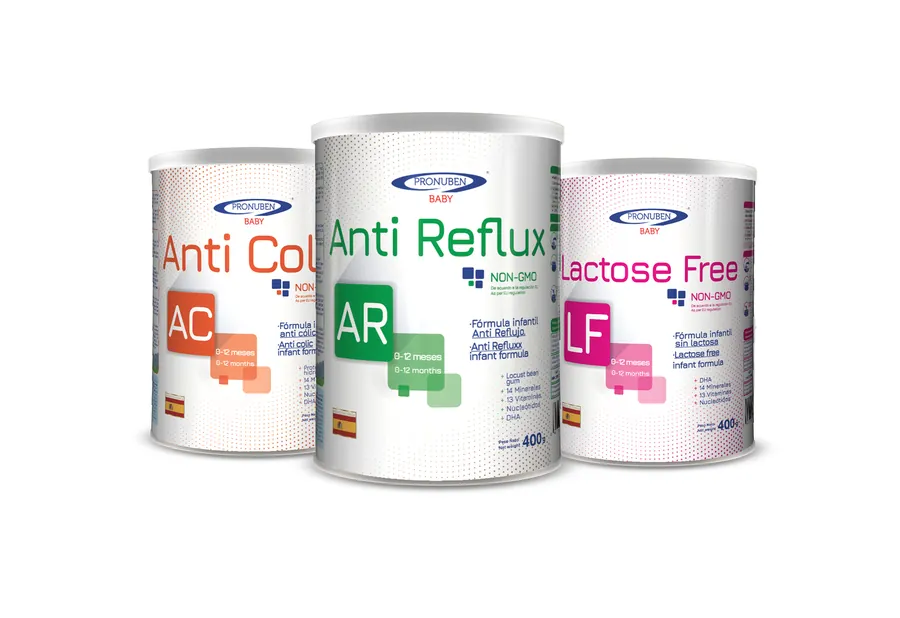
- The same standard across the range: ADVANCE, PREMIUM with DHA, ARA, GOS and FOS, PREMIUM PLUS with HMOs and, from stage 2, probiotics, and our special formulas.
Looking for an infant formula partner whose safety controls are ready for the new EU limit? See how we work on the export and partners page.
Sources
- Agence Europe. EU strengthens safety criteria for infant formula (6 November 2026)
- Food Safety Magazine. EU proposes maximum limits for cereulide in infant formula (September 2026)
- European Commission, DG SANTE. Cereulide incident: results of the EFSA rapid risk assessment
- EFSA Journal (2026), 24(1): e9941